

The Sun and the Moon were considered a binary set among Abraham's Horite Hebrew ancestors. That means that the ancient Ha'biru thought of the Sun and the Moon as entities that naturally belong together, as male and female belong together. The sun represented the male principle observed in creation. It was believed to inseminate the earth and to overshadow those divinely appointed to rule. The Sun and the Moon ruled over separate dominions of day and night, but they were not perceived as being equal (dualism). The Sun was made to be the greater light (Gen. 1:16).
Study of the solar imagery in Genesis reveals that the Sun was a significant symbol for the ancient Hebrew ruler-priests. The Sun was the emblem of the Creator and the Creator's divine son. The "Seed" of Genesis 3:15 is the son of God who was expected to be born of a dedicated virgin who conceived by divine overshadowing. That is what is depicted in ancient images of Hathor, the mother of Horus. That is what was fulfilled in the Virgin Mary who conceived by the overshadowing of the Holy Spirit. This is portrayed in paintings of the Annunciation with the Spirit hovering over Mary in the form of a dove.
In Genesis, we find the Sun linked to the Moon only once: "God made two great lights--the greater light to govern the day and the lesser light to govern the night. He also made the stars." (Gen. 1:16) There are other allusions to the Sun in Genesis and none of these link the Sun to the Moon. The superiority of the Sun is reflected in the fact that the Sun is referenced or alluded to at least 10 times in the first 37 chapters of Genesis.
In Deuteronomy the Sun is linked to the Moon and stars, reflecting the astronomical interests of the Neo-Babylonians. In Exodus, the Sun is depicted as a bronze disk or a coiled serpent on Moses' staff.The golden serpent on the uraeus crown of Pharaoh was a symbol of Pharaoh's divine appointment by solar overshadowing.
Some peoples of the ancient world thought of the Sun and the Moon as the eyes of the Creator who dwelt "on high" or in the heavens. The Sun was regarded as the Creator's right eye and the Moon was the left eye. They were not regarded has having equal strength. The right eye was said to be have better vision than the left eye.
Study of the solar imagery in Genesis reveals that the Sun was a significant symbol for the ancient Hebrew ruler-priests. The Sun was the emblem of the Creator and the Creator's divine son. The "Seed" of Genesis 3:15 is the son of God who was expected to be born of a dedicated virgin who conceived by divine overshadowing. That is what is depicted in ancient images of Hathor, the mother of Horus. That is what was fulfilled in the Virgin Mary who conceived by the overshadowing of the Holy Spirit. This is portrayed in paintings of the Annunciation with the Spirit hovering over Mary in the form of a dove.
 |
| Bishop's crozier with solar serpent, a symbol of divine appointment |
In Genesis, we find the Sun linked to the Moon only once: "God made two great lights--the greater light to govern the day and the lesser light to govern the night. He also made the stars." (Gen. 1:16) There are other allusions to the Sun in Genesis and none of these link the Sun to the Moon. The superiority of the Sun is reflected in the fact that the Sun is referenced or alluded to at least 10 times in the first 37 chapters of Genesis.
In Deuteronomy the Sun is linked to the Moon and stars, reflecting the astronomical interests of the Neo-Babylonians. In Exodus, the Sun is depicted as a bronze disk or a coiled serpent on Moses' staff.The golden serpent on the uraeus crown of Pharaoh was a symbol of Pharaoh's divine appointment by solar overshadowing.
Some peoples of the ancient world thought of the Sun and the Moon as the eyes of the Creator who dwelt "on high" or in the heavens. The Sun was regarded as the Creator's right eye and the Moon was the left eye. They were not regarded has having equal strength. The right eye was said to be have better vision than the left eye.
The Sun was associated with masculine virtues. This is because it is the stronger and the greater light (Genesis 1:16). The sun's rays are like seeds that fall to earth and cause plants to grow. In other words, the sun was said to inseminate the earth. The meteoritic iron found on the earth's surface was worn by chiefs and rulers because it represented power from on high.
The Moon was associated with feminine virtues because it is the Sun's companion, as the wife is to her husband. It is the smaller and weaker light in the sky. Because the Moon affects water, tides, and body fluids in a repeating cycle there is a natural association of the Moon with the periodicity of the female's menstrual cycle. Many ancient peoples associated pregnancy with the Moon. The Moon influences the female's monthly cycle which is why menstruation is called le moment de la lune ("the time of the moon") in French. The Moon also stimulates female lactation.
The Sun is empirically observed as greater in size and strength to the Moon, and the Moon reflects the greatness of the Sun (refulgent light). Likewise, the "mighty men of old" under whom science and technology advanced in the ancient world built their kingdoms through their queens. These rulers appeared with skin darkened by the Sun as a sign of divine overshadowing by which they received their and authority. However, their queens appeared with their skin covered in white powder to represent the Moon.

The solar symbolism of the Bible is masculine, never feminine. The Sun cradled between the bull's horns is a symbol of divine appointment among the Horite Hebrew and is represented by the Canaanite Y in the names of many of the Hebrew clan chiefs.

The Y designates a divinely appointed ruler (deified "son" of God), which is why it appears in the Hebrew names of many Biblical rulers: Yaqtan (Joktan); Yishmael (Ishmael); Yishbak; Yitzak (Isaac); Yacob (Jacob); Yosef (Joseph); Yetro (Jethro); Yeshai (Jesse), Yonah (Jonah), and Yeshua (Joshua/Jesus).
In the ancient world, only one female wore that symbol as her headdress: Hathor, the mother of Horus, who was called the "son" of God. She is a foreshadowing of the Virgin Mary. When Mary inquired how she should become a mother, was told by the angel Gabriel that she would be overshadowed (Luke 1).
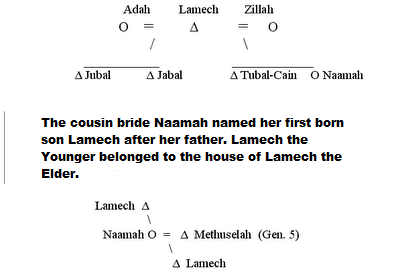
Among Abraham's ancestors the Sun was honored as the Creator's symbol or emblem. They conceived of God as the Great Chief who daily makes his circuit between the two wives/households dawn and dusk. This is why none of the rulers listed in Genesis placed their wives on an east-west axis, except for the Lamech who posed himself as God's equal. Bible scholar Theodore Gaster noted this belief. He explained that the names of Lamech's two wives, Ada and Tzillah, refer to dawn and dusk (The Schocken Bible, Vol. 1, p. 28).
The Moon was associated with feminine virtues because it is the Sun's companion, as the wife is to her husband. It is the smaller and weaker light in the sky. Because the Moon affects water, tides, and body fluids in a repeating cycle there is a natural association of the Moon with the periodicity of the female's menstrual cycle. Many ancient peoples associated pregnancy with the Moon. The Moon influences the female's monthly cycle which is why menstruation is called le moment de la lune ("the time of the moon") in French. The Moon also stimulates female lactation.
The Sun is empirically observed as greater in size and strength to the Moon, and the Moon reflects the greatness of the Sun (refulgent light). Likewise, the "mighty men of old" under whom science and technology advanced in the ancient world built their kingdoms through their queens. These rulers appeared with skin darkened by the Sun as a sign of divine overshadowing by which they received their and authority. However, their queens appeared with their skin covered in white powder to represent the Moon.

The solar symbolism of the Bible is masculine, never feminine. The Sun cradled between the bull's horns is a symbol of divine appointment among the Horite Hebrew and is represented by the Canaanite Y in the names of many of the Hebrew clan chiefs.

The Y designates a divinely appointed ruler (deified "son" of God), which is why it appears in the Hebrew names of many Biblical rulers: Yaqtan (Joktan); Yishmael (Ishmael); Yishbak; Yitzak (Isaac); Yacob (Jacob); Yosef (Joseph); Yetro (Jethro); Yeshai (Jesse), Yonah (Jonah), and Yeshua (Joshua/Jesus).
In the ancient world, only one female wore that symbol as her headdress: Hathor, the mother of Horus, who was called the "son" of God. She is a foreshadowing of the Virgin Mary. When Mary inquired how she should become a mother, was told by the angel Gabriel that she would be overshadowed (Luke 1).

Related reading: Freeing God from Gender and Tradition; Seven Planets, Seven Bowls; Lamech Segment Analysis; Binary Sets and the Binary Worldview; Iron Seeds from Heaven; The Serpent on Moses's Staff; Which is the "Dark" Lover in the Song of Songs?; A Tent for the Sun; Lévi-Strauss and Derrida on Binary Oppositions


