Followers

Showing posts with label binary balance. Show all posts

Wednesday, September 23, 2026

Territorial Ambitions of the Early Hebrew


A royal couple representing the sun and the moon, a binary set.


Dr. Alice C. Linsley

The early Hebrew were observant of the relationship of the sun, moon, and stars. They thought of the sun and the moon as a binary set, that is a naturally paired set of entities. They also noted that one of the entities of the set was superior to the other. This is expressed in Genesis 1:16 which describes the sun as the greater light and the moon as the lesser light. However, though one is greater than the other, both rule their domains. The sun rules the day, and the moon rules the night.

This reasoning is apparent in Joseph’s dream of his parents and siblings (Gen. 37:9-10). Joseph’s father, Jacob, is represented by the sun. Joseph’s mother, Rachel, is represented by the moon. Joseph’s siblings are represented by stars. The dream expresses the hierarchical relationship of his parents (Jacob’s authority being the greater), and it reveals that both parents had authority as the sun and the moon rule over their domains. This accurately describes the social structure of the biblical Hebrew who did not have a fully patriarchal social structure. (This is explained in my book The First Lords of the Earth: An Anthropological Study. 2023.)

Among the early Hebrew the sun-moon binary set was expressed in the way royal couples presented themselves in public. The king appeared with skin darkened by the sun. This implied his divine appointment to rule by the overshadowing of the sun, the symbol of the High God. His queen appeared white as the moon, implying that the powdered queen was to her husband what the moon is to the sun.


The binary sets of light-dark and east-west expressed territorial claims. The two wives in the Song of Solomon represent the two horizons or dawn and dusk. One of Solomon’s wives is described as having sun-darkened skin ("dark as the tents of Kedar") and the other is described as having skin as pale as the moon (6:10). For the rulers of the Ancient Near East, the two wives represent a claim to a vast territory that extends from horizon to horizon.

Likewise, the claim of a territory that stretched between the separate settlements of his two wives is found in the story of Lamech the Elder (Gen. 4). Lamech’s wives were named Adah and Tzillah. The Hebrew scholar Theodor Gaster noted that the names Adah and T-Zillah correlate to the Akkadian words for dawn and dusk. This suggests that Lamech claimed to rule over a vast territory. The sun-moon binary set and the east-west solar arc are used in the Bible to speak of the authority and sovereignty of divinely appointed Hebrew rulers.

The early Hebrew believed that they were to disperse and rule. This is evident in Genesis 1: 28. God told them to "'Be fruitful and multiply; fill the earth and subdue it; have dominion over the fish of the sea, over the birds of the air, and over every living thing that moves on the earth." They took this seriously and long before Abraham's time (c.2000 B.C.) they had already moved into many regions of the Old World.

The Old World throughout which the early Hebrew dispersed.


The Territorial Sovereignty of Father and Son

The early Hebrew conception of territorial sovereignty on earth was patterned on their observation of the celestial pattern. 

As a youth, HR/Horus (the Son of the High God) was associated with the rising sun, dawn, and the eastern horizon. In his maturity he was associated with the setting sun, dusk, and the western horizon. He is often pictured on the solar ship of his father Re making his daily journey from east to west. This artifact of the solar ship shows HR in the form of his animal totem, the falcon.


The Nilotic conception of HR’s journey from youth to maturity involves two vessels. The ship of the morning hours was called Mandjet (Ancient Egyptian: mꜥnḏt) and the ship of the evening hours was called Mesektet (msktt). While Horus was on the Mesektet, he was in his ram-headed form.

Abraham’s Hebrew people conceived of the eternal Son as a lamb at sunrise and a mature ram at sunset. This explains the lamb-to-ram sequence in the story of Abraham on Mount Moriah. Isaac asked his father, “The fire and wood are here, ... but where is the lamb for the burnt offering?” Abraham replied that God himself will provide the lamb (Gen. 22:8). However, God provided a ram instead, and for Abraham the Hebrew that profound revelation spoke of the Father’s offering of his own son. Jesus said that Abraham saw his day and believed (Jn. 8:56).

Wednesday, September 28, 2022

Male and Female are Primary in Hebrew Scriptures


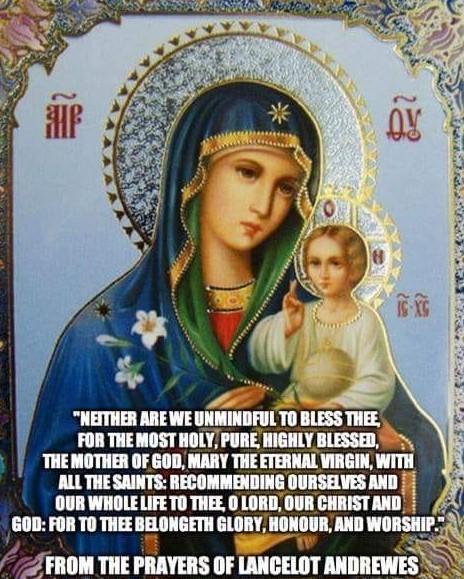
Lancelot Andrewes (1555-1626) was an English bishop who oversaw the translation of the King James Version of the Bible, also known as the Authorized Version.

Dr. Alice C. Linsley

A detailed study of gender in the Hebrew Scriptures reveals that male and female are primary to the Hebrew worldview and to their understanding of God Father and God Son. In recent decades critics of the binary balance of Scripture have falsely claimed that the social structure of the biblical Hebrew was patriarchal. However, anthropological analysis of their social structure reveals that it was characterized by binary balance. This balance is expressed in various biblical narratives. 

There are many examples: the distinct duties/responsibilities of the mother's house versus the father's house; male prophets-female prophets; male rulers-female rulers; inheritance by male heirs-inheritance by female heirs, patrilocal residence-matrilocal residence; Hebrew patronymics-Hebrew matronymics; and in the Hebrew double unilineal descent pattern, both the patrilineage and the matrilineage are recognized and honored, but in different ways. 

The blood symbolism of the Passover associated with Moses has a parallel in the blood symbolism of the scarlet cord associated with Rahab. The abusive behavior of drunken Noah toward his sons has a parallel in the abusive behavior of drunken Lot toward his daughters. 

There is binary balance in the New Testament narratives also. Jesus restored the widow of Nain's deceased son to his mother (Luke 7:11-17). Jesus restored Jairus' deceased daughter to her father (Mark 5:21-43). 

When Jesus was presented in the temple His identity as Messiah was attested by the priest Simeon and the prophetess Anna.

To understand the gender distinctions and binary balance of the early Hebrew, we must dismiss the false narrative that their social structure was patriarchal.

The traits of a strict patriarchy do not apply to the Hebrew from whom we receive the foundation of the Messianic Faith we call "Christianity". There were women chiefs and rulers among them. Women could inherit. Line of descent was traced through high-status wives, especially the cousin brides. Residential arrangements included neolocal, avunculocal, matrilocal, and patrilocal. Assessment of the biblical data reveals that male-female responsibilities and rights were balanced, yet distinct.


Mother’s House versus Father’s House

A very ancient practice is alluded to in Ruth 1:8-9. Here Naomi urges her daughters-in-law to return to their “mother’s house.” This is Naomi’s way of encouraging Orpah and Ruth to remarry. Hoping that they will marry again, Naomi sends them back to their mothers.

The “mother's house” is where women gathered to plan weddings for betrothed girls. The women attended to the practical arrangements for weddings and the items needed to set up a new household. On the other hand, the “father's house” was where the fathers deliberated the terms of the marriage involving dowry, inheritance, and property. The elders of the village were present to witness the deliberations. Sometimes fathers denied marriage to eligible daughters.

A woman who was forbidden to marry (or re-marry) was to return to her father's house. When Judah refused to marry another of his sons to Tamar, as was required by the Levirate marriage law, he told her to return to the father’s house (Gen. 38:11).

Scholars have noted that Rebecca ran to her mother's house to announce the marriage proposal from Isaac (Gen. 24:28). Running to her mother's house expressed Rebecca's willingness to accept Isaac’s proposal. This practice entails more than preparing for a wedding and a new household. It is about building a lineage. Naomi tells both of her widowed daughters-in-law to return to their "mother's house" in the hopes that they would remarry and have families.


Gender and the Priesthood

There are no female priests among the biblical Hebrew. The sacrificing priest would be covered with the blood of the slain animal. Since women were regarded as life-givers, their blood work (menses and childbirth) and the blood work of the priest could never be in the same space.

The male priest is a sign that points to the sacrifice of Jesus Christ. Every Christian priest stands at altar in the person of Christ whose maleness cannot be denied without eviscerating the biblical understanding of His blood sacrifice. By His death comes the forgiveness of sins.

Consistent with the binary balance of Scripture, we find the Virgin Mary is another sign that points to her son. The honor due to her is unique since she alone brought forth the Messiah, the Christ. By her submission and divine overshadowing (Luke 1:35) comes the One who overcomes sin and death.

A male standing at altar is appropriate when we contemplate the blood sacrifice of Jesus Christ. Women priests cause confusion because the sacrament of Christ's giving of Himself is about His Blood, a covering for sin. Female priests overthrow the binary balance.

Were we to contemplate the humble Virgin Mary, would it be appropriate to place before us a male image?

It is no coincidence that the innovation of women priests was first introduced by a denomination that had embraced Feminist thought and had created binary imbalance by promoting erroneous interpretations of Scripture and by dismissing the veneration of the Virgin Mary.


Eve, the Crown of Creation

In the creation stories Eve is the last creature to be given life by the Creator. In this sense she crowns the creation. The biblical Hebrew conceived of the order of creation as a hierarchy, somewhat like the shape of a mountain or a pyramid. The dwelling place of the High God is above the peak and at the peak is the crown of creation. Eve is vulnerable to attack by the Evil One who seeks to invert the hierarchy, placing himself at the head. Eve's submission to the ground-crawling serpent represents a metaphysical reversal of the divine order of creation. 

We live in this reversed state until Christ returns. This is what the Apostle Paul means when he speaks of the whole of Creation groaning and yearning for the day of redemption (Rom. 8:22-23). 

"For we know that the whole creation has been groaning together in the pains of childbirth until now. And not only the creation, but we ourselves, who have the firstfruits of the Spirit, groan inwardly as we wait eagerly for adoption as sons, the redemption of our bodies."