Followers

Showing posts with label Pascha. Show all posts

Sunday, April 5, 2026

Christ has Risen as Foretold


Matthew chapter 28 recounts how two women named Mary came to the tomb very early in the morning. They came toward dawn. John 20:1 indicates that it was still dark. Sunrise Easter services are a way of acknowledging Jesus' resurrection which happened before dawn.

Among the early Hebrew (4000-2000 BC) the Son of God was associated with the sun. He was said to rise in the morning as a lamb and to grow to the mature strength of a ram at sunset. He rode with the Father on the solar boat. The boat of the morning hours was called Mandjet and the boat of the evening hours was called Mesektet. While the Son was on the Mesektet, he was in his ram-headed form. You will recall that God provided a ram for Abraham to sacrifice on Mount Moriah. Abraham would have recognized this as a symbol of the Son of God who his Horite Hebrew people expected.

Related reading: What Abraham Discovered on Mt. Moriah; Righteous Rulers and the ResurrectionEarly Resurrection TextsThe Resurrection Symbolism of Decorated Eggs


Thursday, April 24, 2025

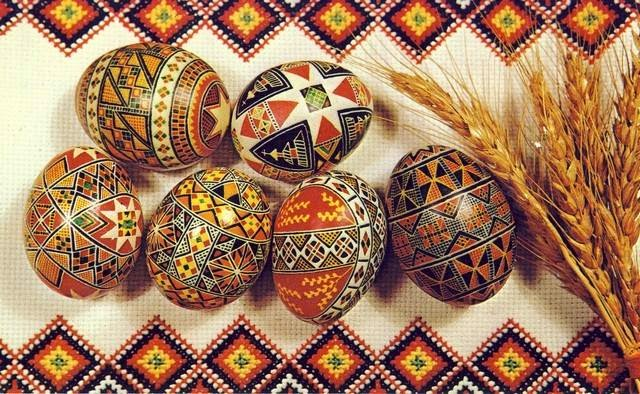
The Resurrection Symbolism of Decorated Eggs


Painted ostrich egg 7th century BC found on Cyprus. Credit: De Agostini Picture Library


For many thousands of years humans expressed grief for the deaths of their loved ones and for their leaders. They also expressed hope that death is not the end in the way they buried those people. For at least 100,000 years some were buried in red ochre, a symbolic blood covering. This practice indicates ritual burial and a yearning for life after death.


These individuals were buried 100,000 years ago in red ocher in what is today Israel.


Many of these burials also included artifacts that indicate belief in an existence beyond the grave. This was especially true for rulers such as King Tut. Among the grave goods found in his tomb were board games, musical instruments, daggers, tunics, sandals, and food provisions, all intended to support the pharaoh in the afterlife. 

In the Nile Valley decorated eggs have been found in the graves of children. Painted ostrich eggs were place in tombs at Hierakonpolis (Nekhen), the oldest known site of Horite Hebrew worship. They also have been found in many graves of children in ancient Nubia. At Naqada, a decorated ostrich egg replaced the owner's missing head. This egg is now in the Ashmolean Museum in Oxford.

The custom of decorating eggs for Pascha or Easter has deep roots in the Messianic Faith that we call "Christianity." Decorated eggs were placed in graves as an expression of hope for life after death.


In the Eastern Orthodox churches patterned eggs are a part of the celebration of Pascha. I observed this at the Armenian Cathedral in the Julfa District of Isfahan, Iran. After the Divine Liturgy, people gathered in the courtyard and gently clicked their eggs together in greeting. 

For Christians, the Easter egg is a reminder that Jesus rose from the grave, and that those who believe in Him will share in His eternal life as citizens of His eternal kingdom.